

The Internet of Behaviours, or IoB, looks at how behaviour data can be collected, analysed and used to influence decisions, services and user experiences.
It builds on the growth of connected devices, digital platforms and analytics. Every interaction can create data: how people use an app, move through a building, respond to a service, engage with content or interact with connected technology.
Used responsibly, this information can help businesses understand needs more clearly and improve the way services are designed. Used poorly, it can create privacy, transparency and trust issues that are difficult to undo.
What is the Internet of Behaviours?
The IoB brings together data, analytics and behavioural insight. It uses information gathered through digital systems to identify patterns in how people act, respond and make decisions.
This might include data collected through websites, apps, connected devices, sensors, wearables or customer platforms. When analysed together, that data can give businesses a clearer view of user habits, preferences and service needs.
The concept has clear value, but it also raises important questions. Behavioural data can be personal, sensitive and easy to misuse without the right controls.
Potential benefits of the IoB
 Better customer experiences
IoB can help businesses understand how customers use products, services and digital platforms. This can support more relevant recommendations, clearer communications and services that reflect real user behaviour.
When handled carefully, behavioural insight can reduce friction in the customer journey and make digital experiences easier to use.
Improved operational performance
Behavioural data can also support internal operations. By looking at how employees interact with tools, systems and workflows, businesses can identify delays, repeated issues or areas where teams may need better support.
This can help improve processes, reduce wasted time and give leaders a clearer view of how digital systems perform in daily use.
More informed decision-making
IoB can give decision-makers stronger evidence when reviewing services, policies or business processes. Instead of relying only on assumptions, teams can use behaviour data to identify patterns, risks and opportunities.
The quality of those decisions depends on the quality of the data, how it is interpreted and whether the organisation has clear rules for how that data should be used.
Privacy and ethical concerns
IoB depends on data, and that creates risk. Users may not always understand what information is being collected, why it is being collected or how it may be used later.
Lack of transparency
One of the main concerns with IoB is transparency. If users cannot see how their data is collected and used, they cannot make informed decisions about consent, privacy or participation.
Clear communication is essential. Privacy notices, consent processes and data policies need to be easy to understand, not hidden behind vague wording or unnecessary complexity.
Data misuse
Behavioural data can be powerful because it gives insight into habits and decisions. That also makes it sensitive.
Businesses using IoB must avoid manipulative or harmful uses of data. Behavioural insight should improve services and support users, not pressure people into decisions they would not otherwise make.
Regulation and accountability
Technology often moves faster than regulation. That does not remove the responsibility on businesses to act carefully.
Organisations using behavioural data need strong governance, clear ownership and documented processes. They also need to understand which regulations apply to the data they collect, store and analyse.
Data security
The more data an organisation collects, the more important security becomes. Behavioural data must be protected against unauthorised access, misuse, loss and cyberattack.
Encryption, access control, multi-factor authentication, monitoring and regular security reviews all have a role to play. Security cannot be added after the data has already been collected and exposed to risk.
Using IoB responsibly
The Internet of Behaviours can support better services and stronger decision-making, but only when it is managed carefully. Businesses considering IoB should put governance, security and user trust at the centre of the project.
A responsible approach should include:
- clear privacy policies that explain what data is collected and why
- transparent consent processes
- strong data protection controls
- data minimisation, so only the necessary information is collected
- regular reviews of how behavioural data is used
- security measures that protect data throughout its lifecycle
- internal guidance on ethical data use
IoB should not be treated as a shortcut to influence people. It should be used to understand behaviour, improve services and support better decisions without compromising privacy or trust.
Where IoT fits in
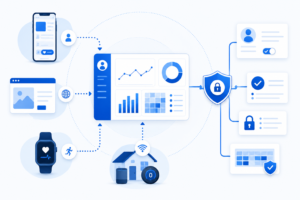 IoB is closely linked to the Internet of Things. Connected devices, sensors and platforms can generate the data that behavioural analysis depends on.
For businesses managing assets, buildings, infrastructure or operational environments, IoT can provide useful visibility. That data becomes more valuable when it is secure, well-managed and connected to clear business outcomes.
The challenge is making sure the technology, analytics and governance work together. Without that, IoB projects can create more risk than value.
Speak to Centerprise
Centerprise can support businesses with IoT solutions that help track, monitor and analyse connected assets in real time.
Our team can help with cloud infrastructure, analytics, secure platforms and connected technology services that support data-led operations. If you are exploring IoT, behavioural insight or wider digital transformation, we can help you assess the technology and the controls needed to use it responsibly.
Contact Centerprise to discuss how our IoT and cloud services can support your next project.