

End-user computing, or EUC, brings together the devices, applications, desktops, data and access controls people need to work securely and effectively.
A strong EUC strategy looks at how users work across the organisation, which systems they need, where they need to access them, and how those services should be managed. This can include laptops, desktops, mobile devices, virtual desktops, cloud applications, SaaS platforms, identity management, endpoint security and device lifecycle support.
Rather than managing each device, application or user environment in isolation, EUC helps create a more consistent and controlled way to deliver workplace technology. The aim is to improve access, simplify management, strengthen security and support users across office, remote and hybrid working environments.
For some organisations, this may include virtual desktop infrastructure or desktop as a service. For others, it may focus on managed devices, secure application access, endpoint management and cloud-based productivity tools. The right approach depends on the needs of the business, the user base, the existing infrastructure and the level of control required.
End-user computing use cases
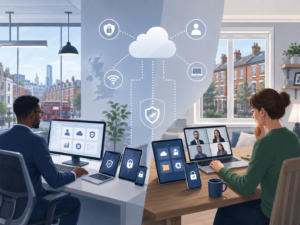 End-user computing can support a wide range of working models, especially where organisations need to manage users, devices and applications at scale.
Remote offices
Organisations with multiple sites or remote offices often need to deliver a consistent user experience without placing unnecessary pressure on local IT teams.
An EUC solution can help users access the desktops, applications and data they need, regardless of location. Centralised management also makes it easier to apply updates, resolve issues, add new users and maintain security standards across different sites.
Compliance and licensing control
EUC can help organisations maintain better visibility over software use, access permissions and device compliance.
By managing applications, desktops and user environments centrally, IT teams can reduce the risk of unauthorised software, improve licensing control and apply security policies more consistently. This is particularly useful for organisations working with sensitive data or regulated processes.
Remote and hybrid workers
Remote and hybrid working have increased the need for secure, flexible access to business systems.
A well-designed EUC environment can provide users with access to required desktops, applications and files across approved devices, while helping the organisation maintain control over data, identity and security. This supports productivity without relying on unmanaged access or fragmented systems.
BYOD users
Bring-your-own-device policies can introduce additional security and management challenges.
EUC can help organisations define how personal devices connect to business systems, what users can access, and how data is protected. With the right identity, access and endpoint controls in place, BYOD can be supported without exposing the organisation to unnecessary risk.
Virtual desktops and end-user computing
Virtual desktop infrastructure, or VDI, is one part of end-user computing. It allows desktop environments to be hosted centrally and accessed through an endpoint device, such as a laptop, thin client or tablet.
VDI can help centralise desktop management, reduce dependency on high-spec endpoint devices and support secure access for remote users. Updates, applications and security controls can be managed at the host level, which can simplify administration and improve consistency across the user base.
However, VDI is not the only route to EUC. Many organisations now use a mix of physical devices, virtual desktops, cloud-hosted desktops, SaaS applications, mobile device management and identity-based access controls.
A successful EUC strategy should start with user needs, security requirements and operational goals, rather than a single technology choice. For some environments, VDI or desktop as a service may be the right fit. For others, a managed device and application access model may be more suitable.
Speak to Centerprise about end-user computing
Centerprise can help organisations assess their end-user computing requirements and design a solution that supports secure access, simplified management and flexible working.