

How Barts Health NHS Trust and CiLifecycle tackled hazardous battery waste with confidence
Challenge
Barts Hospital faced the complex task of ethically and safely disposing of over 400 Workstation on Wheels (WOW) trolleys containing hazardous LiFePO₄ batteries, requiring strict compliance, specialist handling, and sustainable recycling.
What is a LiFePO4 Battery?
A LiFePO₄ battery is a type of lithium-ion rechargeable battery that uses lithium iron phosphate as the cathode material. They are valued for their stability and long service life, but still contain components that require specialist handling to prevent environmental harm and ensure safe recycling. Proper disposal recovers valuable materials, avoids landfill contamination, and keeps the process compliant with environmental and safety regulations.
WOW Trolleys – Disposal
- Specialist Recycling: LiFePO4 batteries must be processed by accredited battery recyclers with the expertise to manage hazardous waste safely.
- Secure Transport: Each trolley must be individually loaded and secured to prevent collisions, which could trigger battery reactions and potential fire hazards.
- Regulatory Compliance:
- Transportation is subject to strict regulations, including limits on the number of units per vehicle.
- DG-certified drivers and fire-resistant containers are required for higher volumes.
- Hazard classification includes List of Wastes (EWC code): 16 02 13* and Dangerous Goods Code UN3481 (Lithium batteries contained in equipment).
The Solution
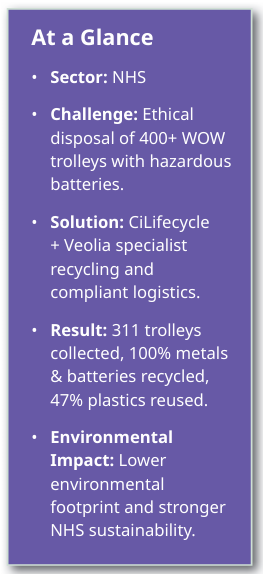
Partnering with CiLifecycle and Veolia, the hospital implemented a tailored WOW trolley disposal service with DG-certified drivers, secure logistics, and advanced recycling methods to ensure safety, compliance, and sustainability. This service includes:
- Specialist Handling & Logistics:
- So Secure, compliant collection from healthcare facilities.
- Use of Dangerous Goods (DG) certified drivers and specialist transport teams.
- Advanced Recycling & Sustainability:
- High-efficiency recycling methods to recover valuable materials.
- Safe and ethical disposal of hazardous components to protect human health and the environment.
The Results
CiLifecycle successfully collected and recycled 311 trolleys across five NHS sites, recovering valuable materials, reducing environmental impact, and delivering seamless, compliant disposal with full documentation and professional support.
The environmental benefits of this project are highlighted in the table below:
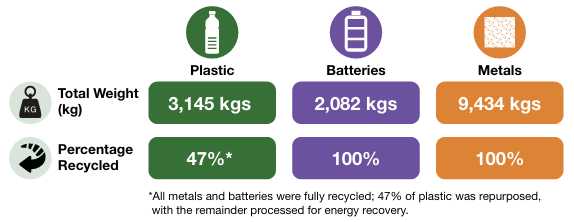
By ensuring the correct recycling of hazardous components, CiLifecycle and Veolia have significantly reduced environmental impact, maximised material recovery, and improved sustainability when disposal of WOW trolleys is needed.
Why Centerprise
“Like many NHS trusts, we faced challenges in ethically disposing of WOW trolleys containing hazardous LiFePO₄ batteries. Partnering with Centerprise provided a fully compliant, ethical solution for over 400 units. Their professionalism and efficient handling gave us total confidence in the process”
Facilities Manager, Barts NSH Trust